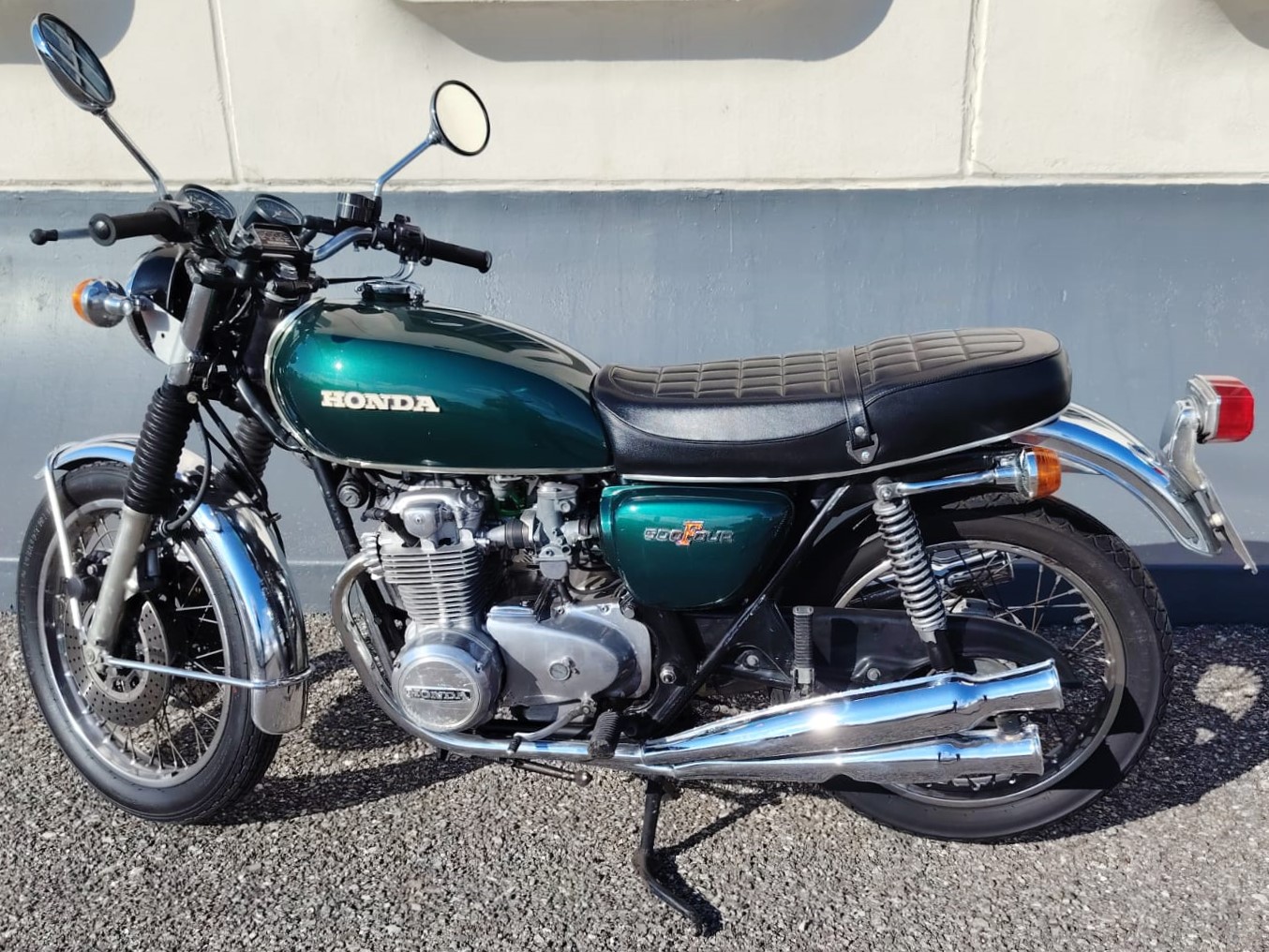
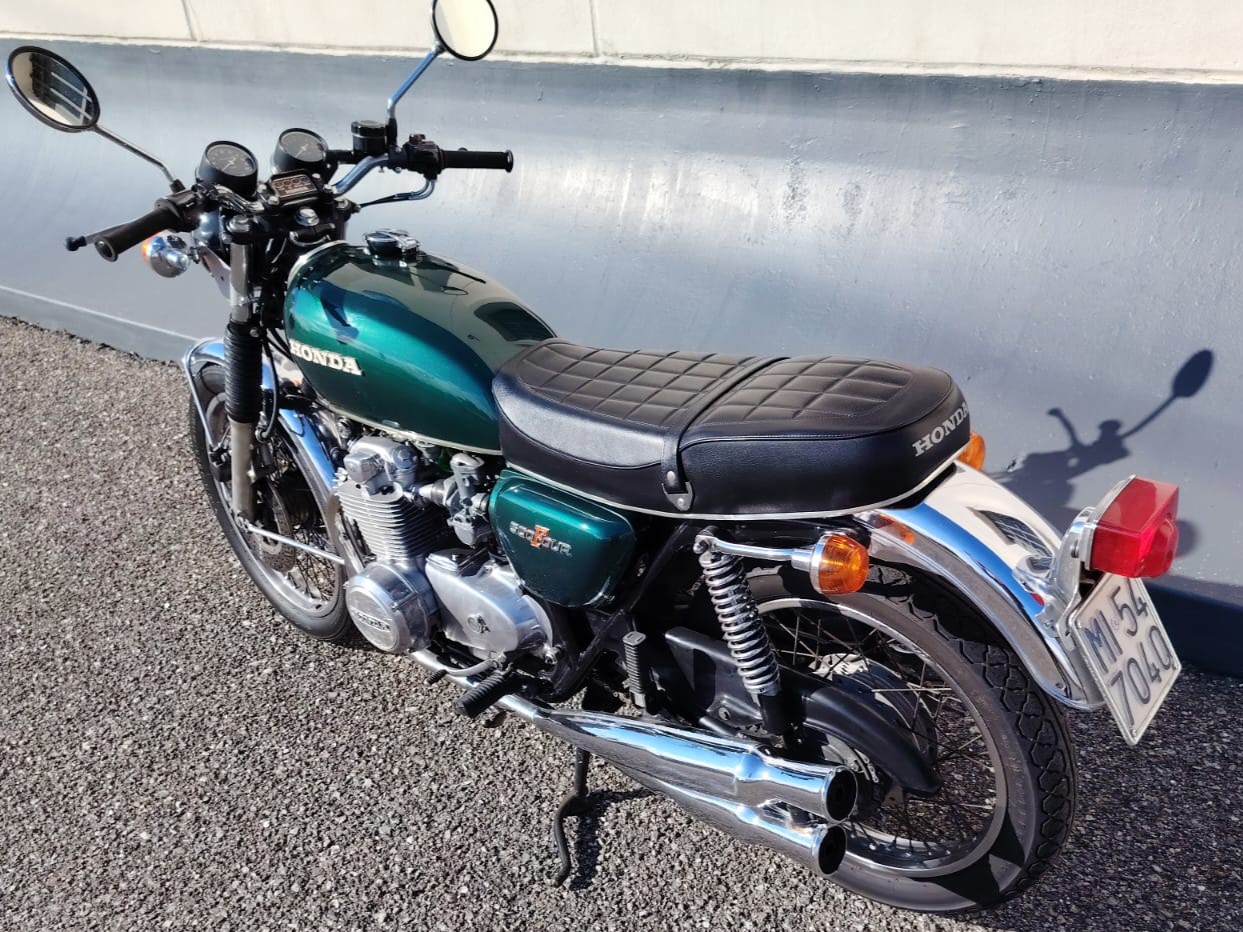
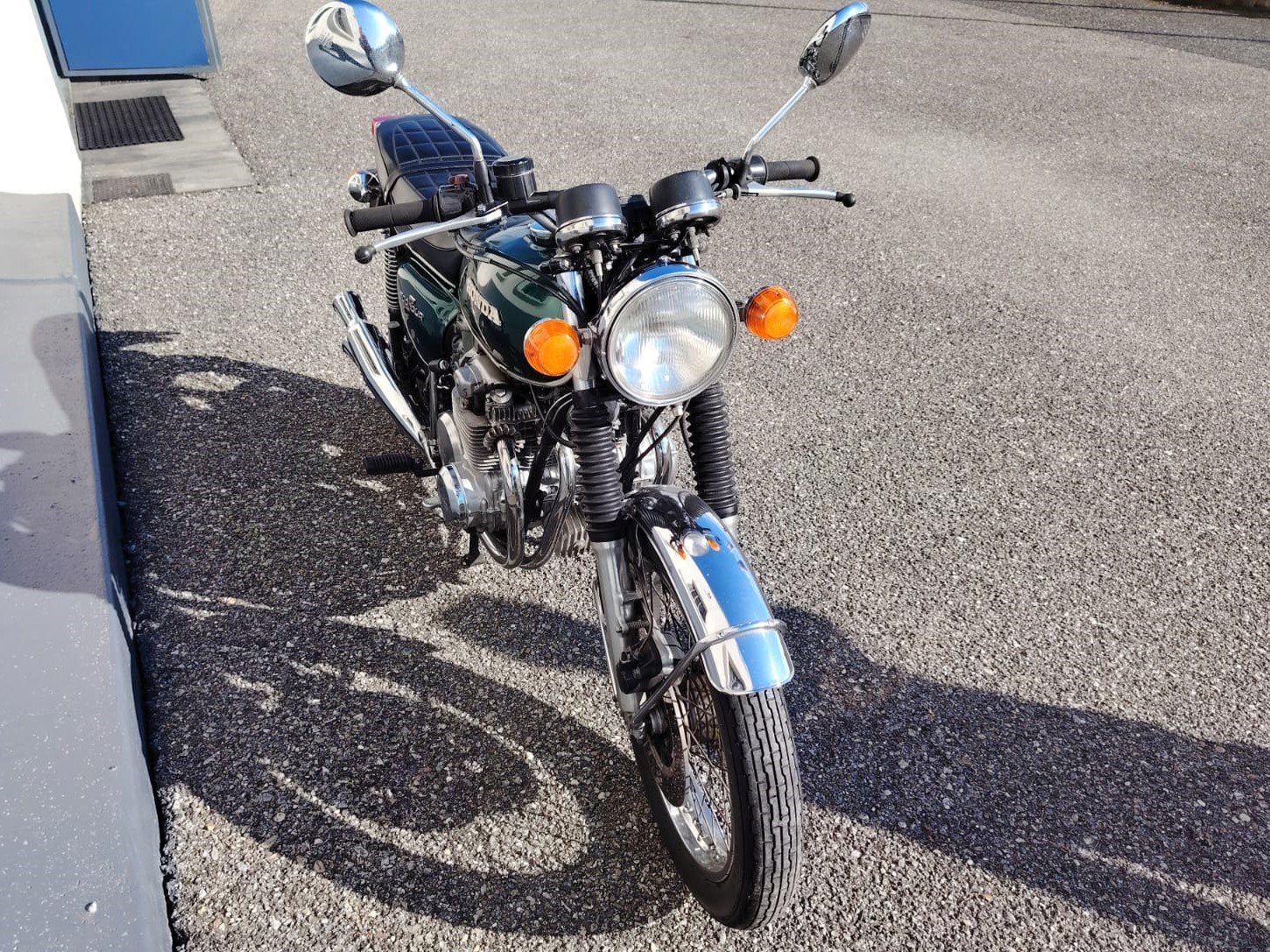
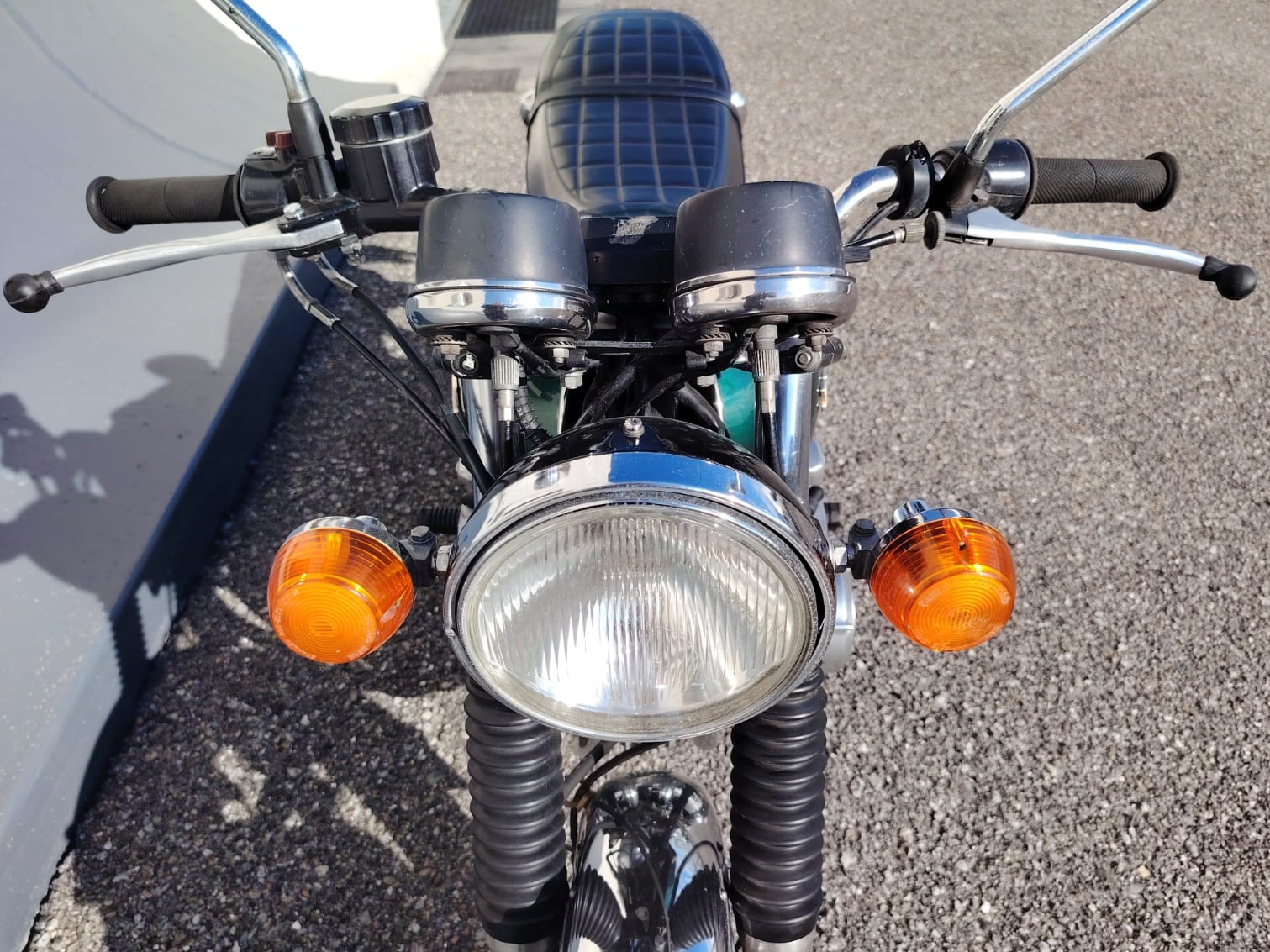
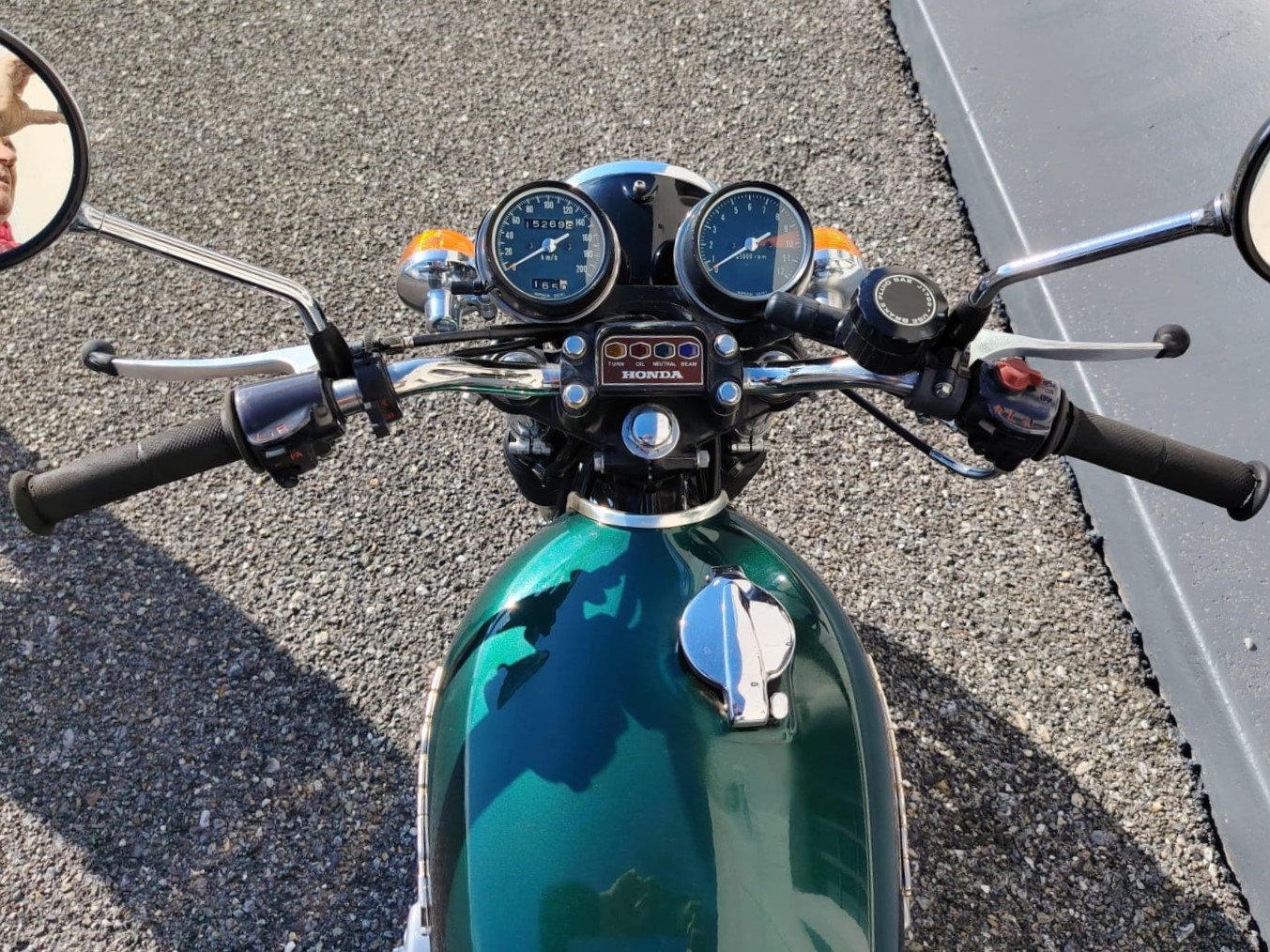
HONDA CB 500 FOUR – 1976
Technical specifications, history and collector interest
VEHICLE IDENTIFICATION
- Make: HONDA
- Model: CB 500
- Year: 1976
- Frame number: 2077054
- Engine designation: GB 500 E
- Displacement: 498 cc
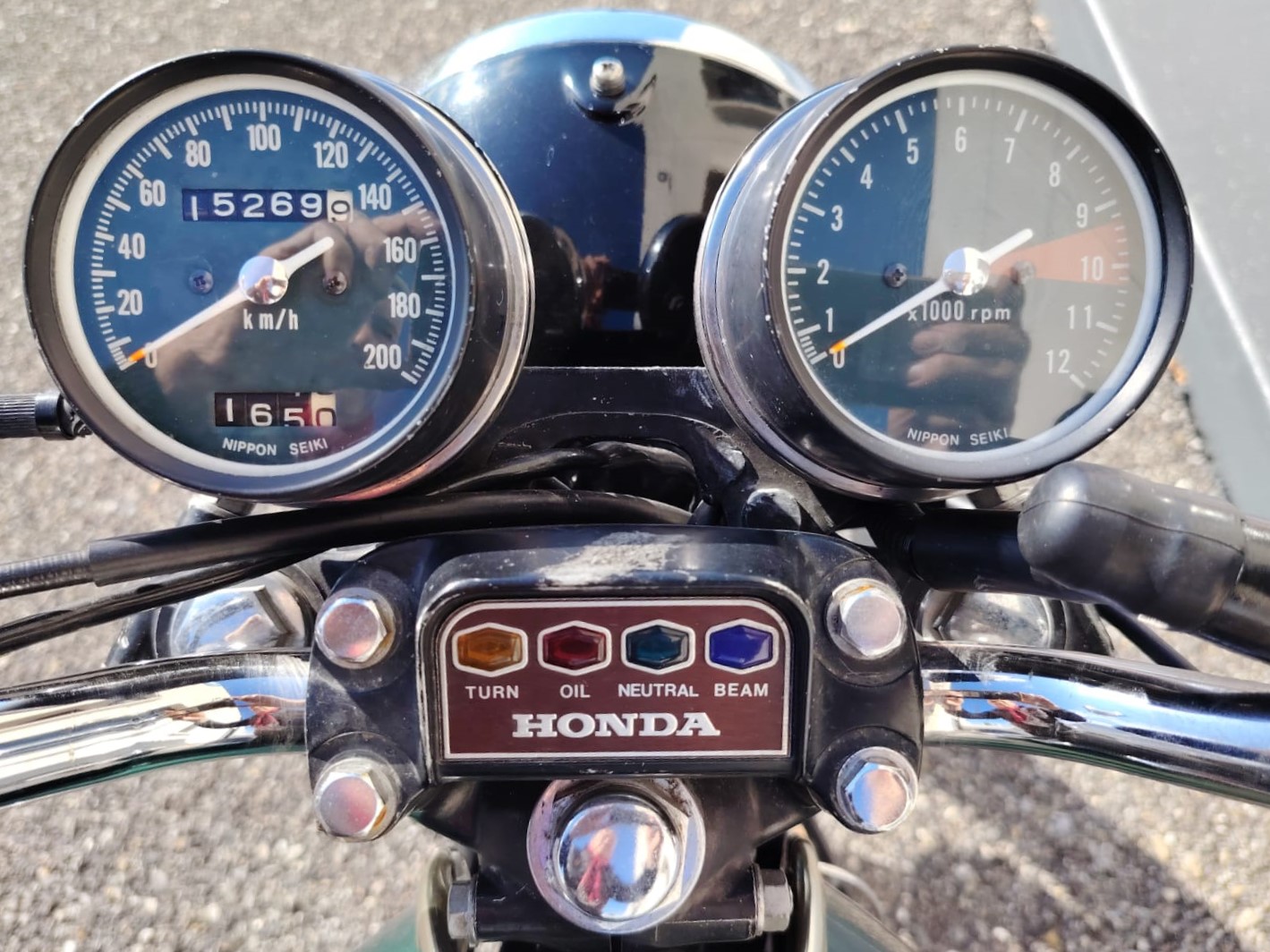
- Odometer reading: 15,269
- Number of owners: 4
Scrittura
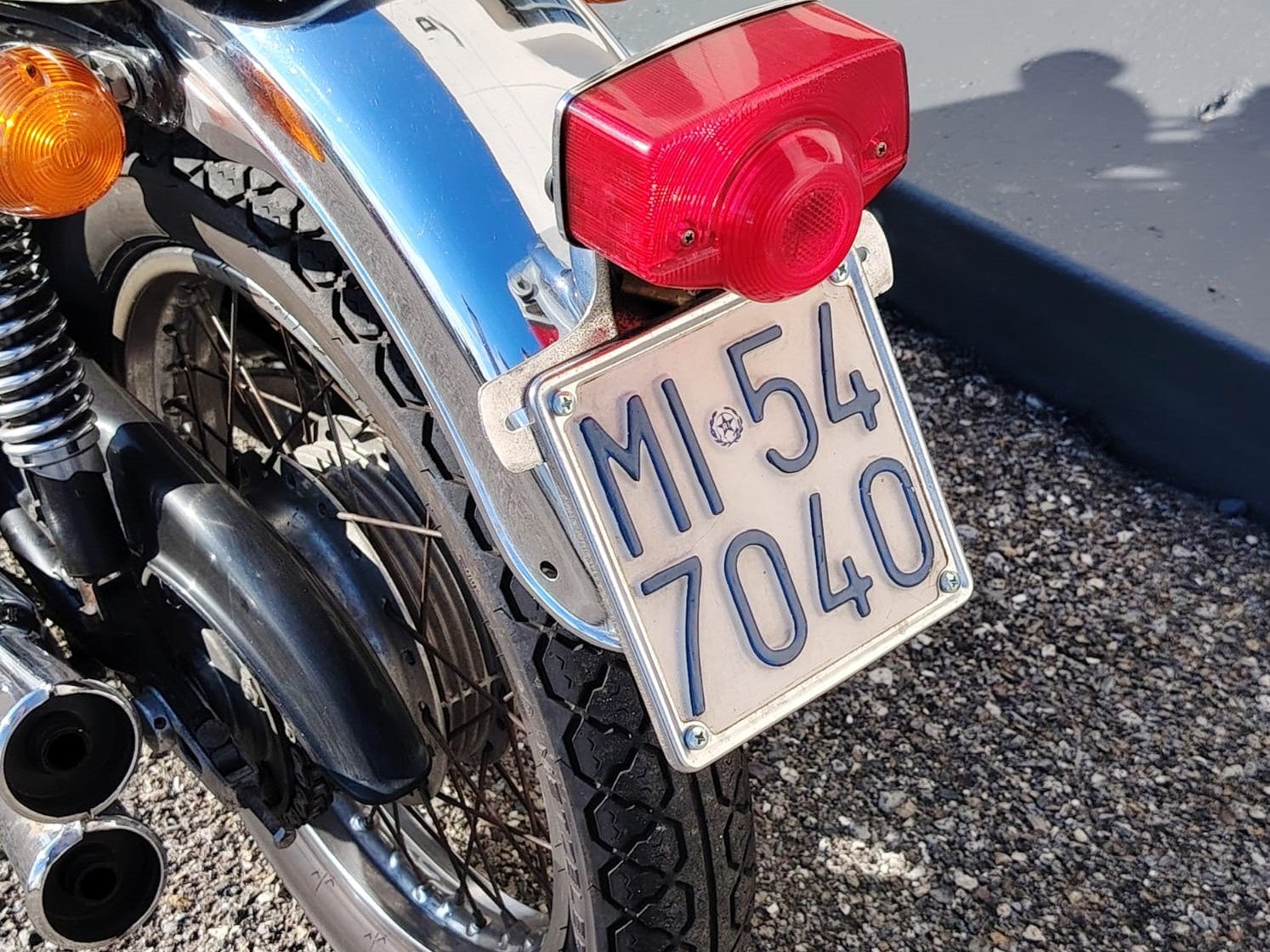
Original Milan Registration Plates and Documented Maintenance
The motorcycle retains its original Milan registration plates and comes with maintenance invoices totalling €3,213.28,
Work carried out and maintenance performed:
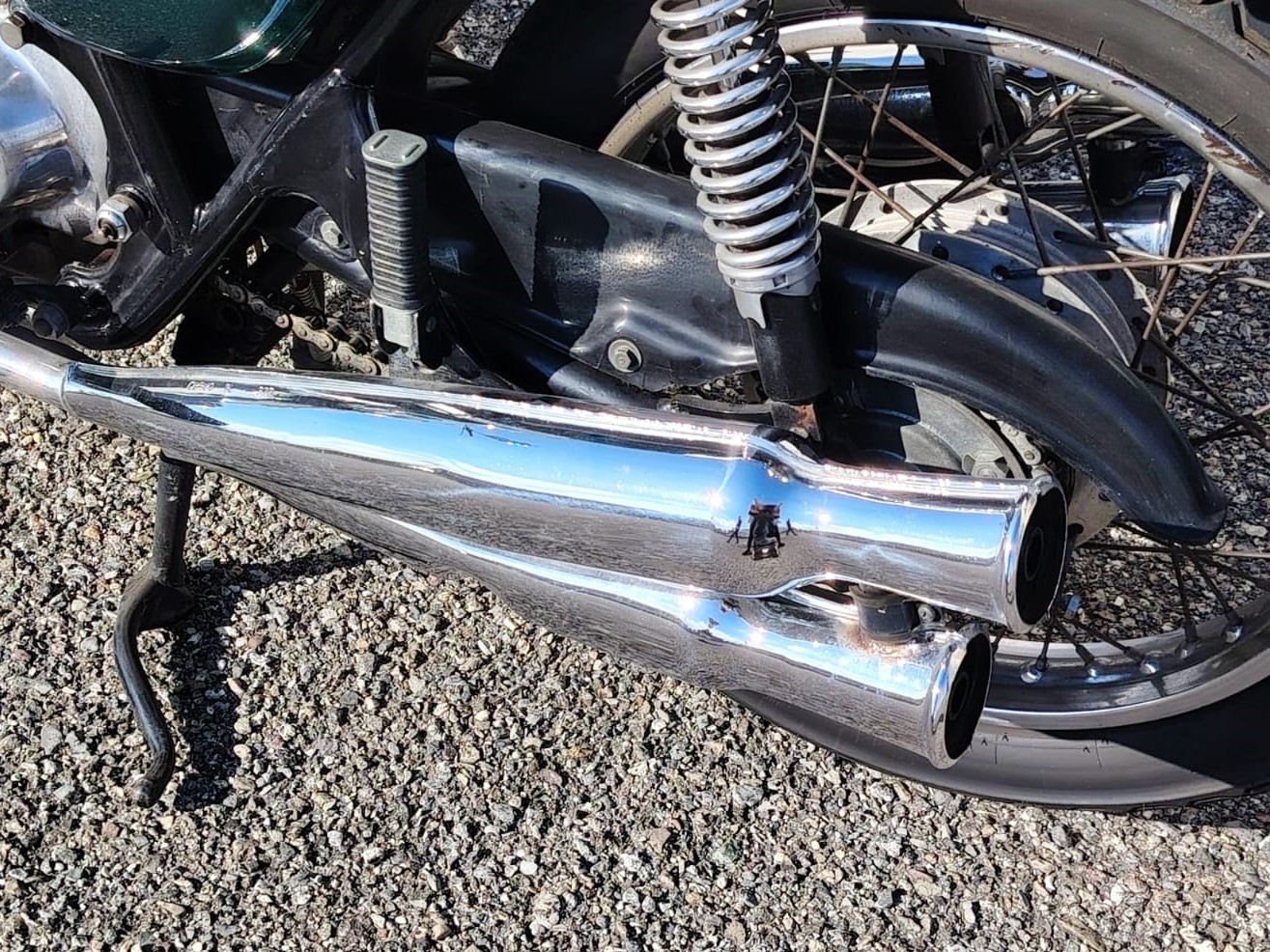
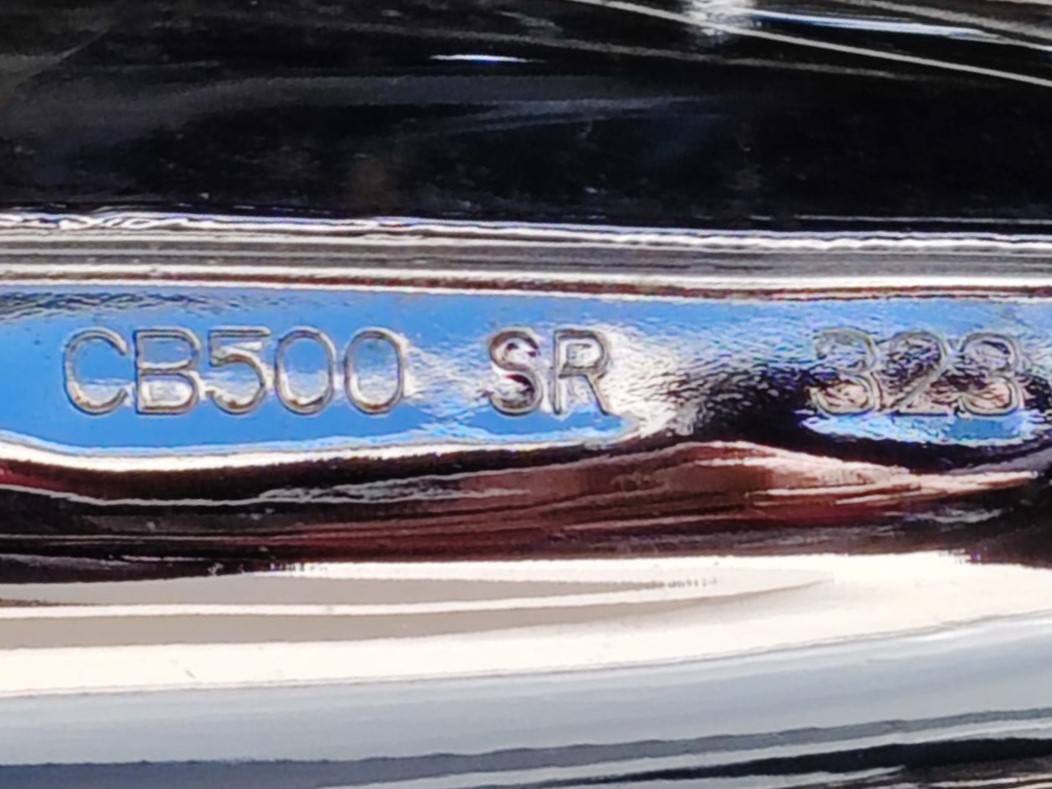
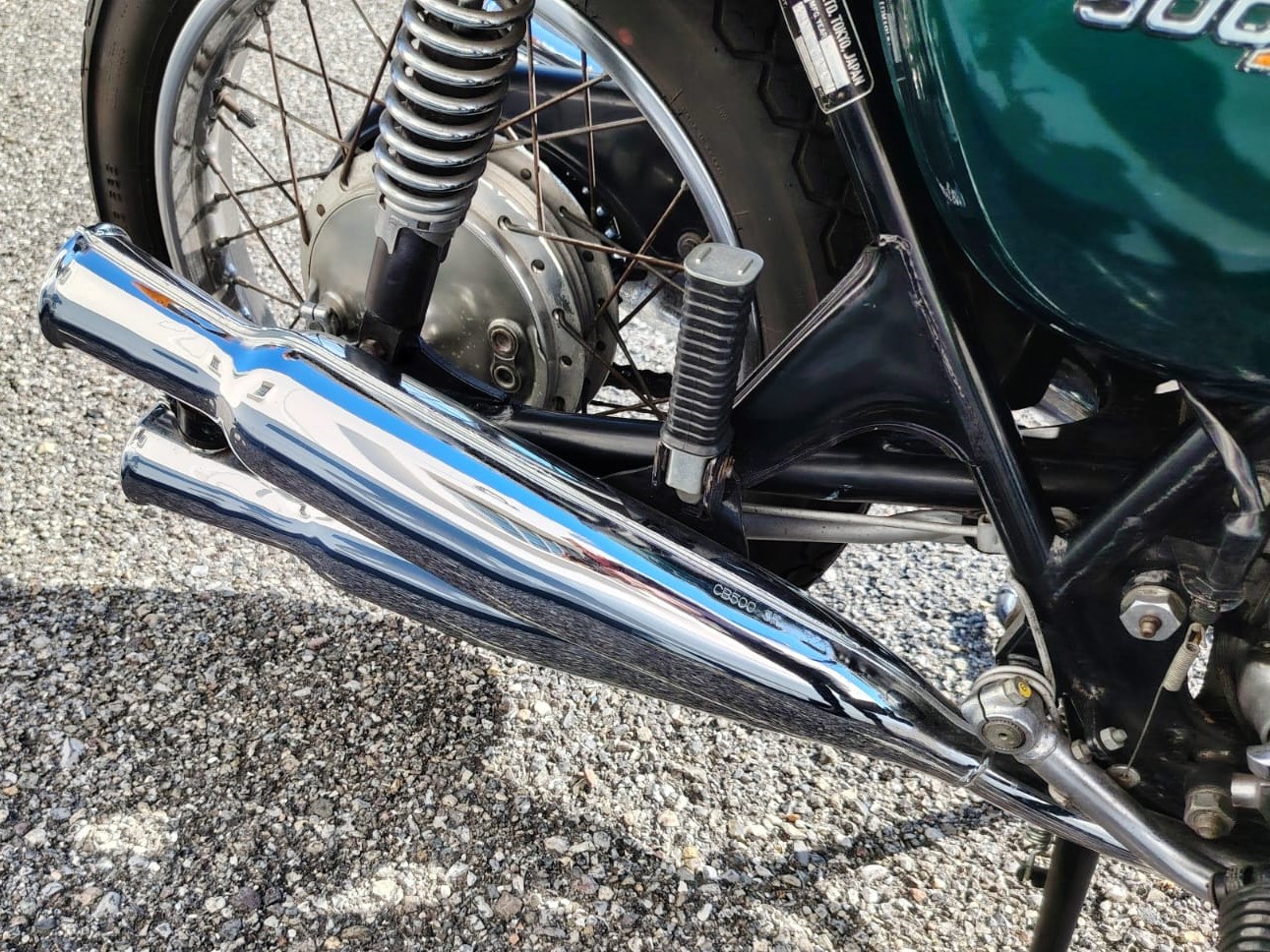
- Replacement of the Honda exhaust system kit and exhaust mounting brackets.
- Replacement of the chrome handlebars and left-hand grip.
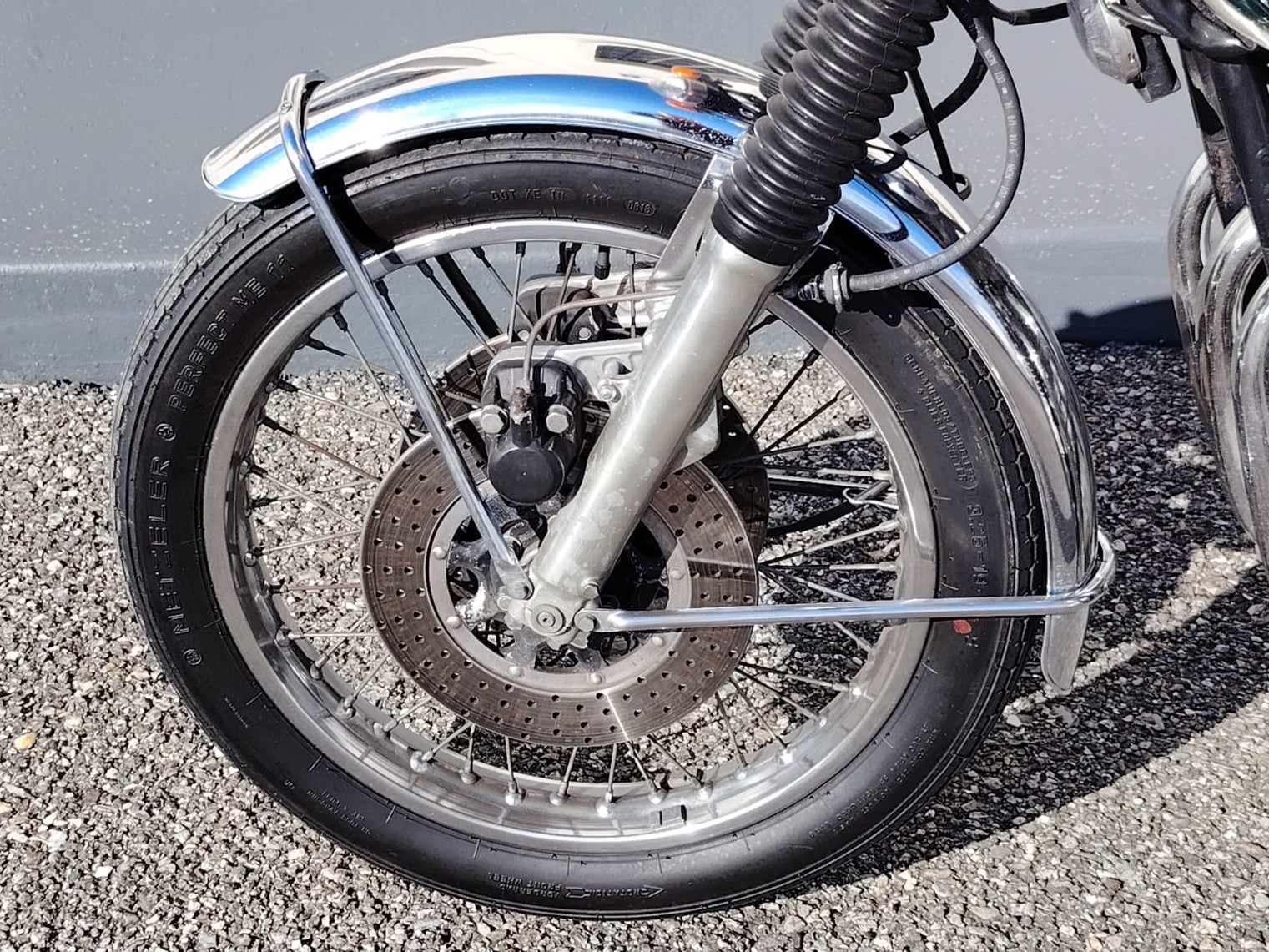
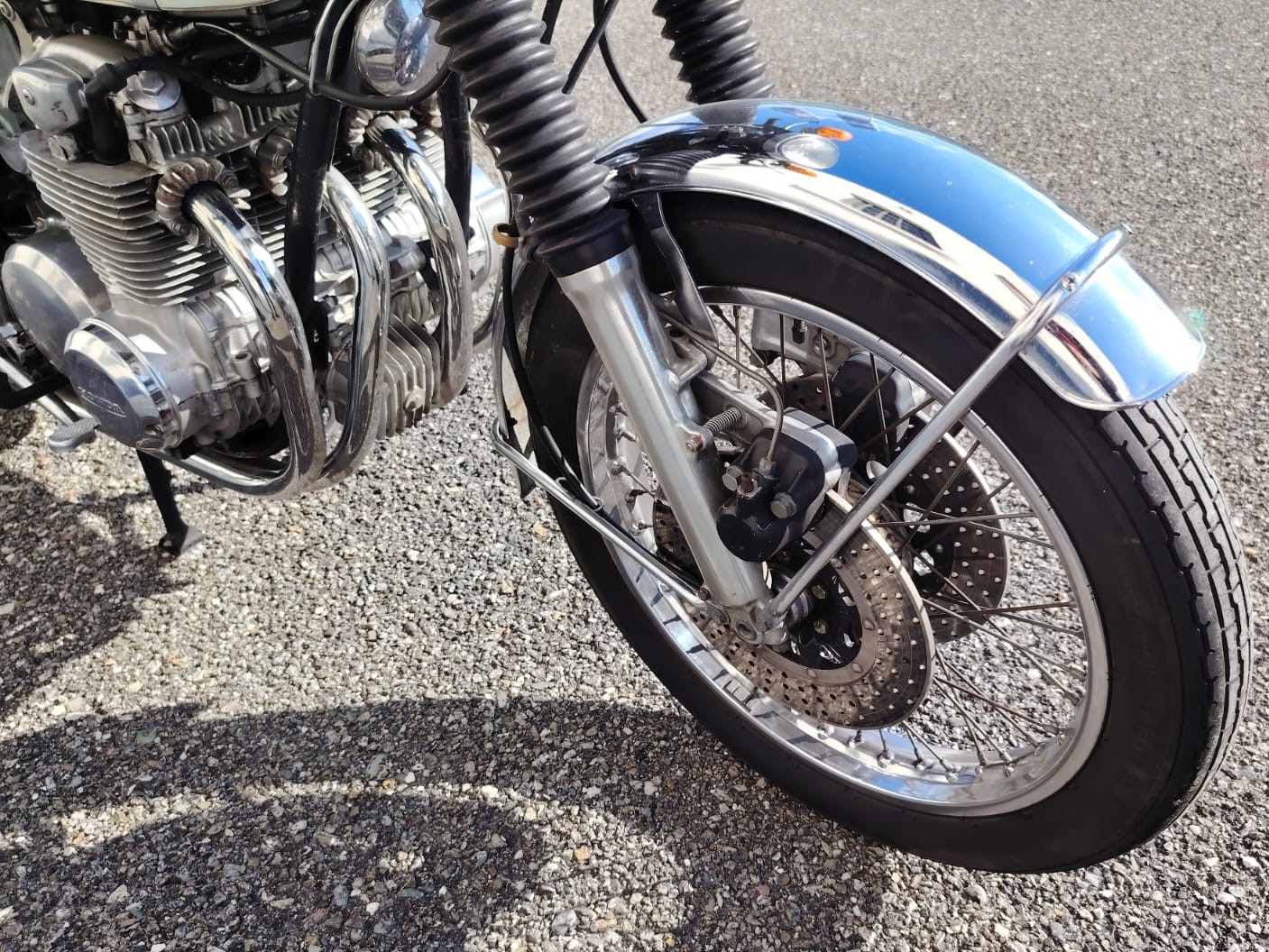
- Work on the front brake oil line and servicing of the braking system, including brake bleeding, front brake caliper cleaning and brake fluid replacement.
- Replacement of the kickstand spring and spring holder.
- Replacement of the rubber grips on the brake and clutch levers.
- Replacement of the clutch transmission components and throttle cables.
- Maintenance work on the shock absorber, steering and front forks, including disassembly, lubrication and reassembly.
- Carburettor servicing and internal cleaning.
- Replacement of carburettor O-rings and exhaust gaskets.
- Engine oil change, including replacement of the oil filter and spark plugs.
- Replacement of the front and rear tyres, including the associated disposal fees.
- Addition of fuel additive.
- Replacement of the number plate frame.
- Battery charging and repainting of the kickstand and battery holder.
- Final motorcycle wash.
All work is documented by the invoice, which shows a total of €3,213.28, including spare parts, materials and labour.
GENERAL DESCRIPTION
The 1976 Honda CB 500 Four is one of the most significant representatives of Japanese motorcycle engineering in the 1970s. Designed to combine lively performance, smooth operation and outstanding mechanical reliability, this motorcycle stands out for its sophisticated inline-four engine, high manufacturing quality and timeless styling, which has become emblematic of the period.
Introduced in 1971, the CB 500 Four followed the success of the celebrated CB 750 Four. It shared the larger model’s design philosophy and some of its styling cues while developing its own distinctive technical identity. Honda aimed to offer a medium-displacement four-cylinder motorcycle that was lighter and more manageable than its larger sibling without sacrificing smoothness, performance or finish quality.
By 1976, the model had reached a mature stage in the development of the CB 500 Four range sold in international markets. Its traditional yet sophisticated engineering, together with the distinctive arrangement of four separate exhaust pipes, secured its place among the most representative classic Japanese motorcycles.
TECHNICAL SPECIFICATIONS
Engine and performance
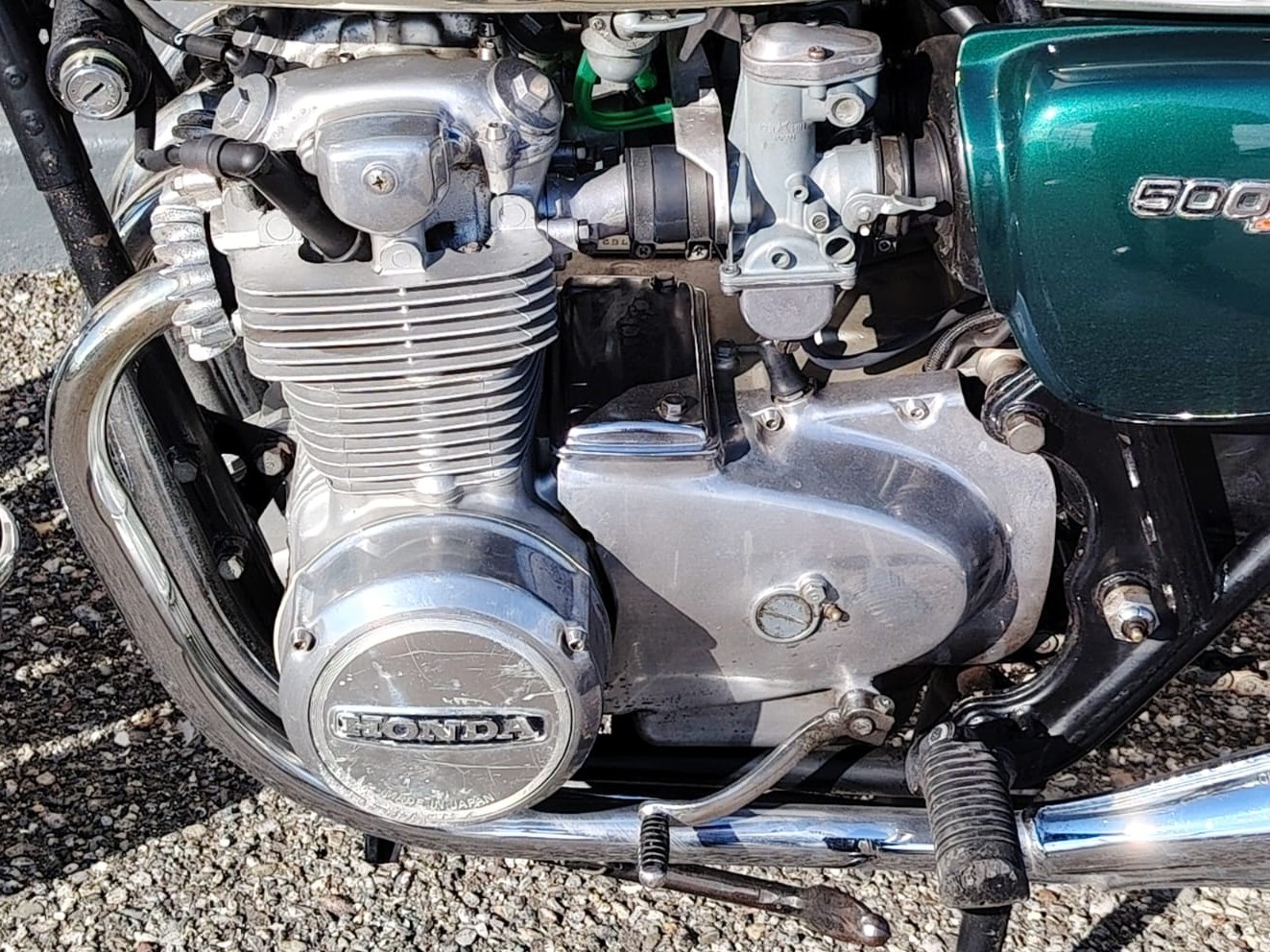
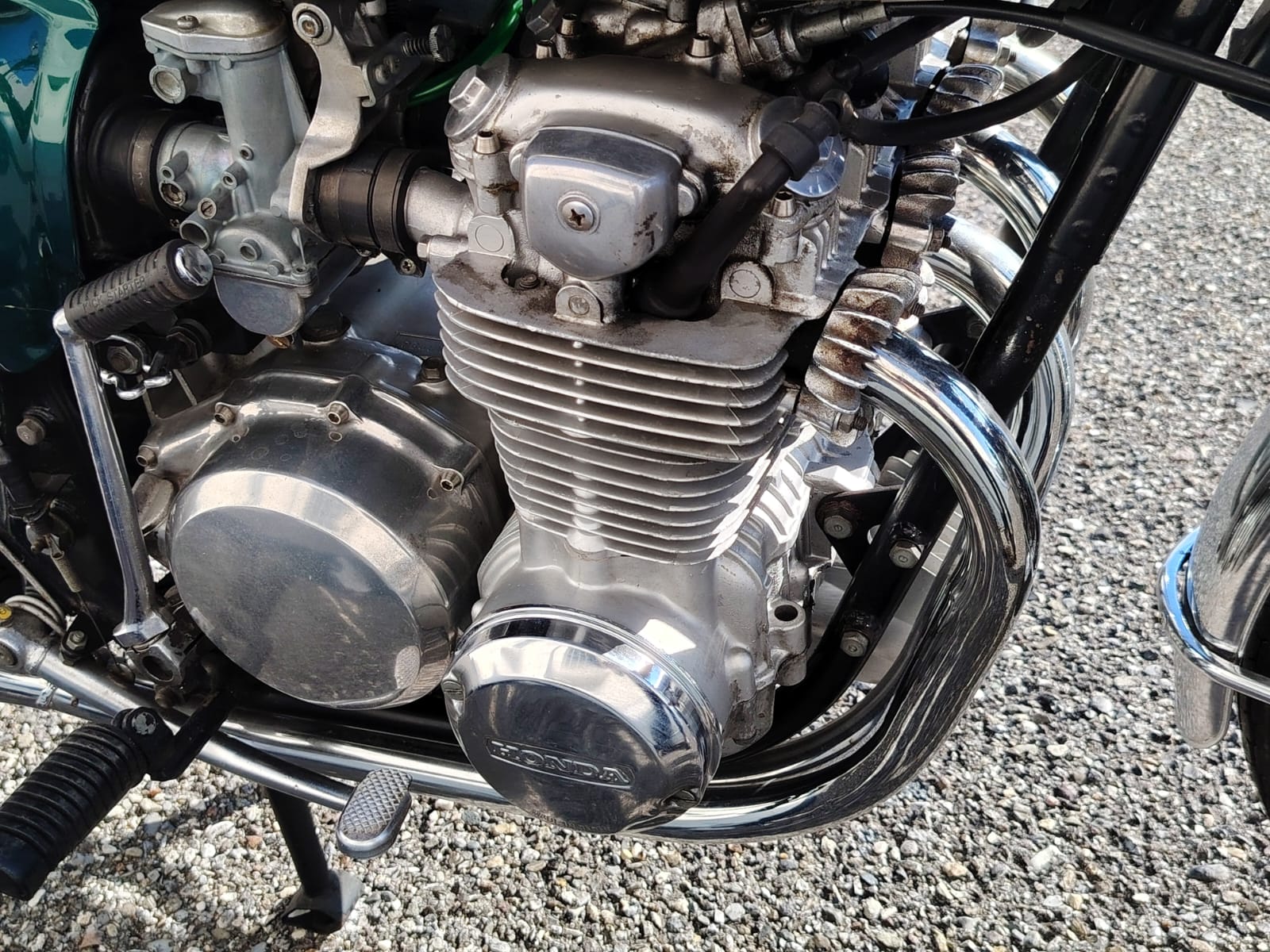
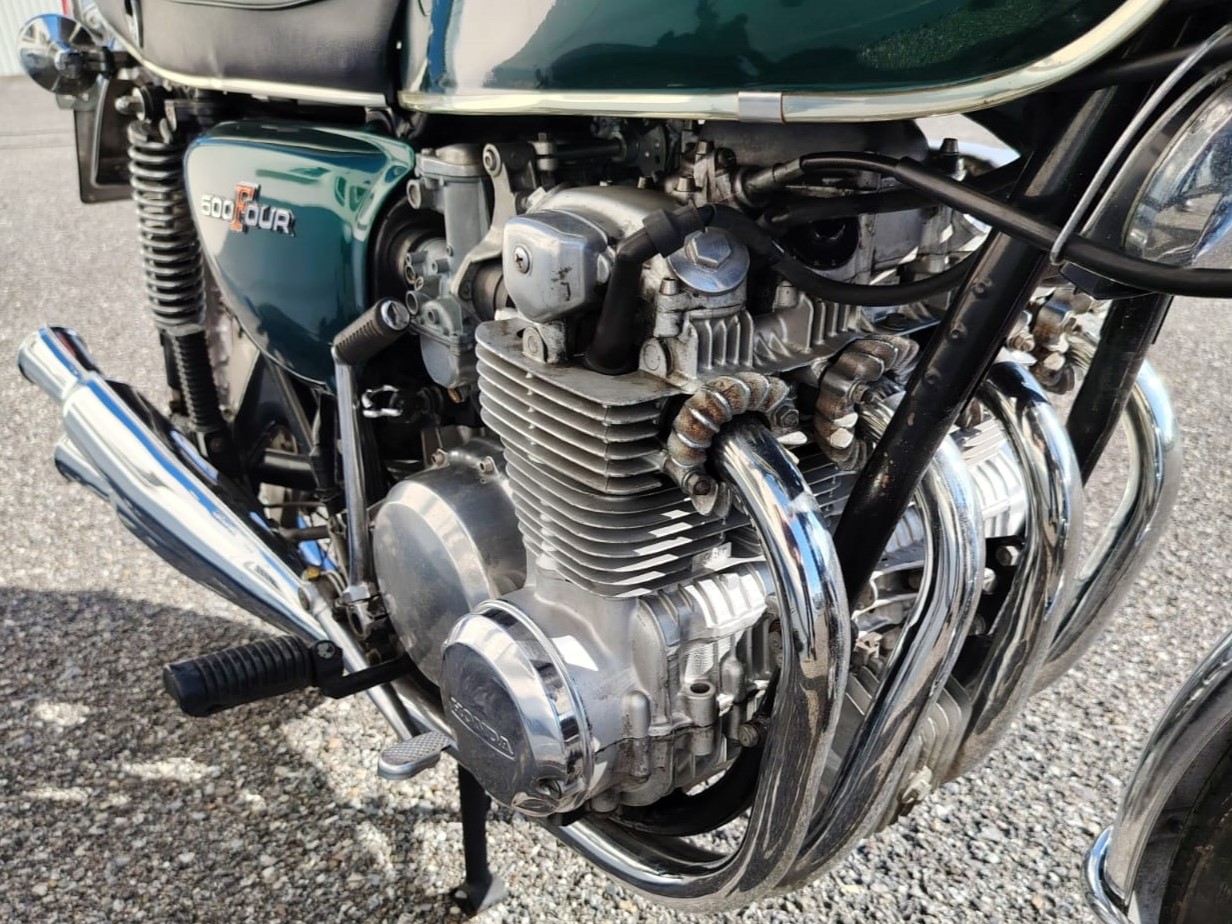
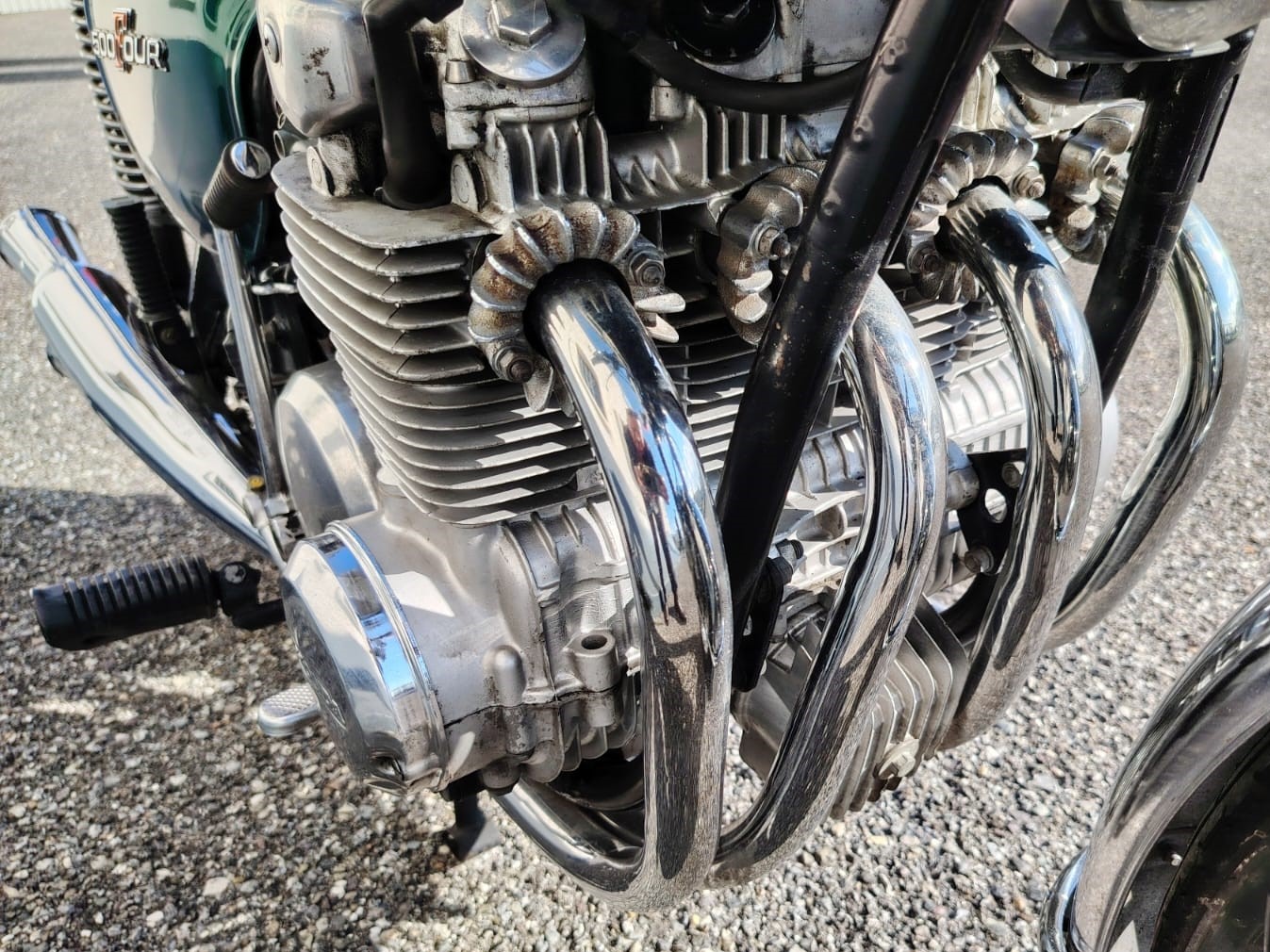
The engine is a transverse, air-cooled, four-stroke inline-four with a displacement of 498 cc. It features a single overhead camshaft (SOHC) and two valves per cylinder, for a total of eight valves. Fuel delivery is provided by four carburettors, while the electric starting system makes everyday use more convenient.
The quoted maximum output for the CB 500 Four family is generally around 48–50 hp, depending on the market and measurement standard. The engine is renowned for its progressive power delivery, smooth revving characteristics and distinctive four-cylinder sound.
Lubrication is by wet sump, with the engine oil stored in the crankcase sump. This differs from the dry-sump arrangement used on the CB 750 Four and contributes to a more compact engine layout. The transmission is a five-speed gearbox with chain final drive.
Frame and chassis
The motorcycle uses a steel, closed double-cradle frame designed to provide stability and balanced road handling. The suspension consists of a telescopic front fork and twin rear shock absorbers, following the conventional layout of road motorcycles of the period.
Braking is provided by a hydraulic front disc and a rear drum brake. Wheel types and certain equipment details may vary according to market specification and should be verified on the individual motorcycle.
Design and equipment
The CB 500 Four fully embodies the styling of the 1970s, with a clearly sculpted fuel tank, long seat, analogue instruments, chrome-finished components and a prominently displayed four-cylinder engine.
Its most distinctive visual feature is the arrangement of four separate exhaust headers and four individual silencers. This gives the motorcycle an unmistakable profile and highlights its mechanical architecture. The analogue instrument cluster, generally centred around a speedometer and tachometer, reflects the model’s classic, functional design philosophy.
MODEL HISTORY
Honda introduced the CB 500 Four in 1971, during a period of major change in the international motorcycle market. The success of the CB 750 Four had demonstrated the potential of Japanese four-cylinder engines, combining strong performance, modern engineering and reliability.
Honda developed the 500 to make these qualities accessible to a wider audience. Its smaller displacement and lower weight compared with the 750 provided more agile, less demanding handling while preserving the refinement of a multi-cylinder engine.
Several developments and revisions were introduced throughout the production run, with versions identified by different series designations. The CB 500 Four became popular for its assembly quality, smooth engine operation and versatility in everyday and touring use. The CB 500 Four family was progressively succeeded by the larger-displacement CB 550 Four, introduced in 1974 as an evolution of the same design philosophy.
The motorcycle described here, dated 1976, therefore belongs to the mature phase of a model family that helped establish Honda’s reputation in the four-cylinder road motorcycle segment.
RARITY AND COLLECTOR INTEREST
The Honda CB 500 Four is not generally regarded as an exceptionally rare model in absolute terms. It was a series-production motorcycle sold in several markets and valued for its reliability. However, the exact number manufactured specifically in 1976 cannot be established with confidence from the information currently available. Nor can the rarity of frame number 2077054 be determined without reliable factory records or other authoritative documentation.
Its collector appeal lies primarily in the combination of historical significance, engineering and design. The inline-four configuration, original styling, separate exhaust system and importance within Honda’s 1970s production make it attractive to enthusiasts of classic Japanese motorcycles.
Complete examples that have been properly preserved and remain faithful to factory specifications may be considerably less common than the overall number of surviving motorcycles suggests. Original components such as the four silencers, chrome parts, instruments and model-specific fittings can significantly influence historical interest and market value.
A reliable collector assessment should include verification of the frame number against the registration documents, engine identification, originality of components, quality of any restoration, availability of historical documentation and overall condition.
NOTES ON THIS PARTICULAR EXAMPLE
The information supplied identifies a 1976 Honda CB 500 with frame number 2077054, engine designation GB 500 E, a displacement of 498 cc, an odometer reading of 15,269 and a recorded ownership history of four owners.
The odometer reading is an instrument reading and, without supporting documentation, should not automatically be interpreted as the motorcycle’s verified total mileage. Similarly, the correspondence between the frame, engine and original factory specification should be confirmed by examining the relevant documents and identification numbers.
Overall, the 1976 CB 500 Four is a significant example of Honda’s motorcycle engineering in the 1970s: a classic four-cylinder road bike combining balanced handling, sophisticated mechanical design and immediately recognisable styling.